
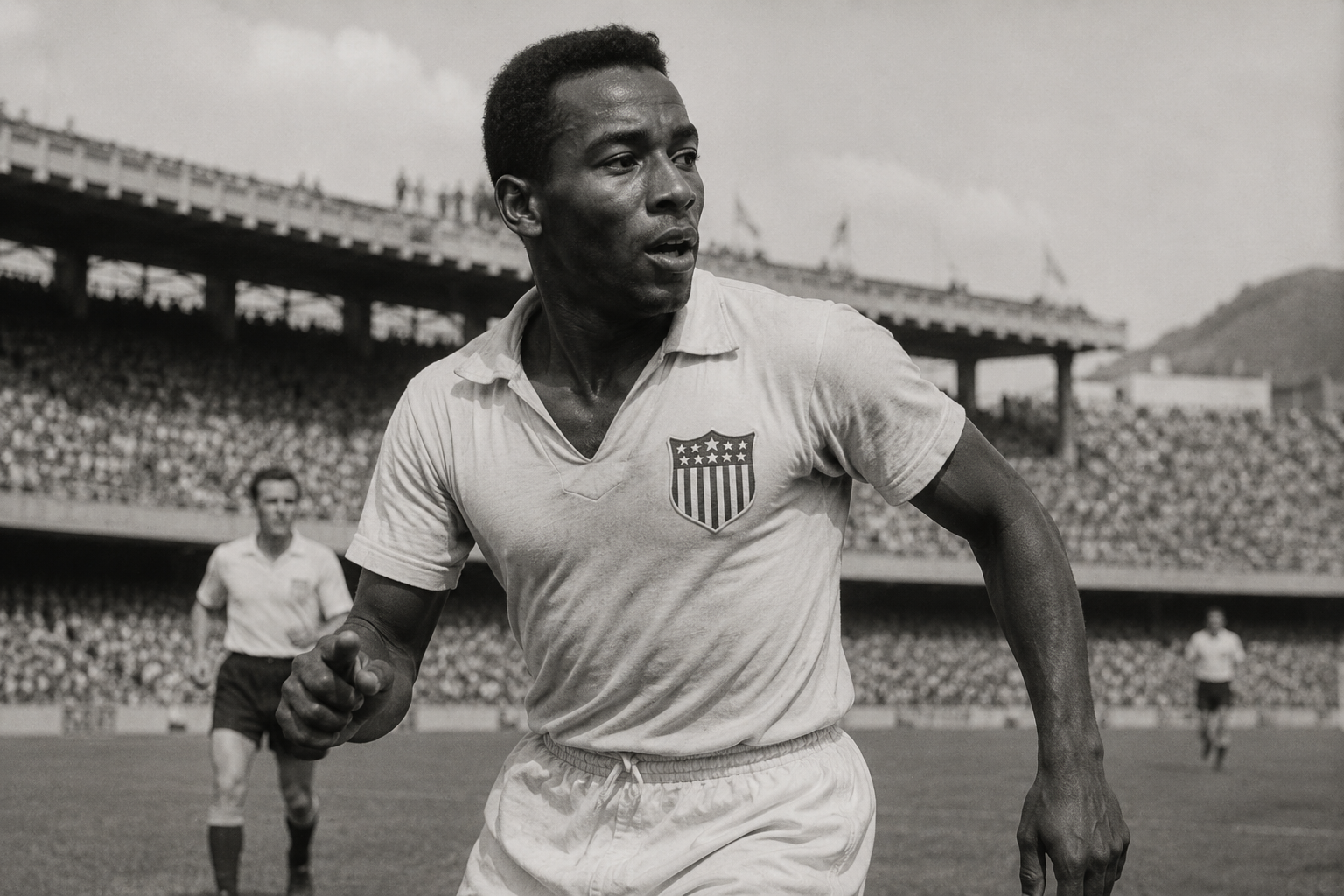
Artistic recreation of Joe Gaetjens, the Haitian-born forward who scored the United States’ winning goal against England at the 1950 World Cup. Illustration: The FootIcon.
On June 29, 1950, one of the greatest upsets in World Cup history unfolded in Belo Horizonte, Brazil. England arrived as one of the tournament favorites. The United States brought a team largely composed of part-time players and outsiders whom almost nobody expected to win.
Then, in the 37th minute, Walter Bahr struck the ball toward the English goal. Joe Gaetjens, a Haitian-born forward who was not even an American citizen, threw himself toward it and redirected it past goalkeeper Bert Williams. The United States won 1–0.
For a moment, Gaetjens was the unlikely hero at the centre of one of football’s greatest shocks. But the most extraordinary part of his story came after the World Cup.
He would play in France, return to his native Haiti and eventually disappear under the dictatorship of François “Papa Doc” Duvalier. His life ended in tragedy, while the goal he scored in Brazil lived on.
This is the story of the man behind the goal — and how a World Cup hero vanished into one of the darkest chapters of Haitian history.
Player Profile
| Full Name | Joseph Edouard Gaetjens |
| Born | March 19, 1924 |
| Birthplace | Port-au-Prince, Haiti |
| Position | Forward |
| National Team | United States |
| World Cup Goals | 1 |
| Historic Moment | Winning goal vs England |
From Haiti to New York
Joe Gaetjens was born in Port-au-Prince, Haiti, in 1924, into a family with Haitian and European roots. Football entered his life long before the world knew his name, and as a young player he developed his game in Haiti before leaving the country for the United States.
He arrived in New York in the 1940s as a student. Like many footballers in the United States at the time, Gaetjens lived far from the glamorous world associated with professional players today. While building a new life in the city, he continued playing football and was eventually noticed while competing for an amateur team.
That opportunity led him to Brookhattan, a New York club in the American Soccer League. Gaetjens quickly proved that he belonged. By the 1949–50 season, he had become the league’s leading scorer with 18 goals, a performance that suddenly placed the Haitian forward on the radar of the United States national team.
He had not taken part in the United States’ World Cup qualifying campaign. Yet when the squad prepared to travel to Brazil in 1950, his goals had become impossible to ignore. Joe Gaetjens was heading to the World Cup.
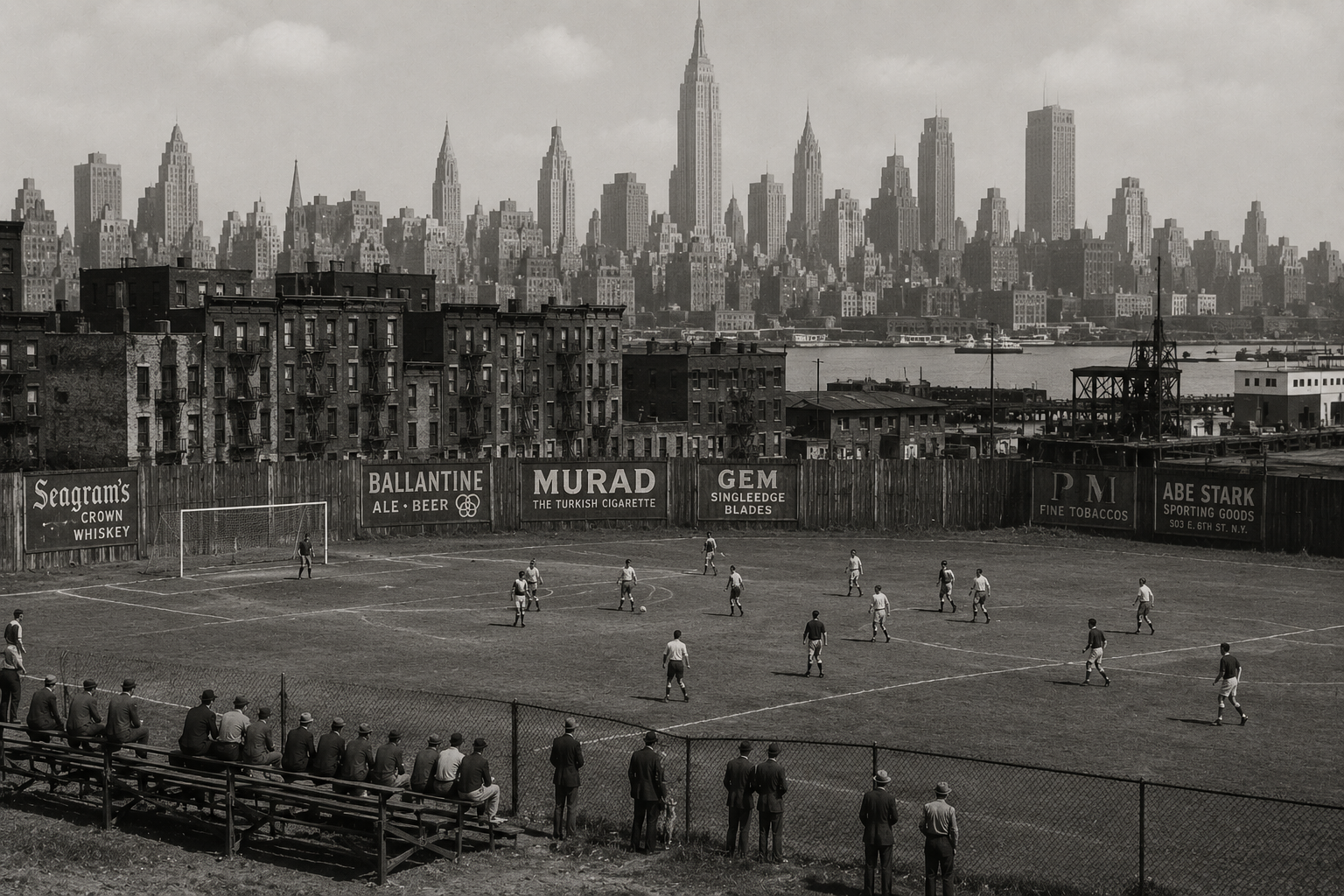
Artistic recreation of New York’s football scene in the late 1940s, the environment in which Joe Gaetjens emerged as a leading scorer before the 1950 World Cup. Illustration: The FootIcon.
An Unlikely American International
When the United States assembled its squad for the 1950 World Cup, Joe Gaetjens was an unusual candidate. He had been born in Haiti, was not a U.S. citizen and had never represented the Americans during their qualifying campaign.
Under the eligibility rules of the time, however, Gaetjens could represent the United States after declaring his intention to become an American citizen. His performances for Brookhattan had also made a compelling case: after finishing among the American Soccer League’s leading scorers, he was selected for the squad travelling to Brazil.
The team itself hardly resembled a World Cup powerhouse. Many of its players held jobs away from football, and they had little time to prepare together before the tournament. England, by contrast, arrived in Brazil with some of the most respected players in the game and was widely expected to go deep into the competition.
The United States opened its campaign with a 3–1 defeat to Spain. Their next opponent was England.
Few believed what happened next was possible.
Did You Know?
Joe Gaetjens was not a U.S. citizen when he scored one of the most famous goals in American soccer history.
Born in Haiti, Gaetjens was eligible to represent the United States under the rules in place at the time after declaring his intention to become an American citizen. He never completed the process and later represented Haiti in international football.
The Miracle in Belo Horizonte
On June 29, 1950, the United States walked onto the pitch at the Estádio Independência in Belo Horizonte to face an England team expected to beat them comfortably. England had begun its first-ever World Cup campaign with a 2–0 victory over Chile, while the Americans had lost 3–1 to Spain.
From the opening minutes, England attacked relentlessly. Frank Borghi was repeatedly called into action in the American goal, while the English struck the woodwork and created chance after chance. The expected goal, however, never came. The United States survived long enough for the impossible to begin taking shape.
In the 37th minute, Walter Bahr struck the ball from around 25 yards. England goalkeeper Bert Williams moved across his goal expecting to collect it, but Gaetjens launched himself into the path of the shot and redirected the ball with a diving header. Williams was wrong-footed.
United States 1–0 England.
England spent the rest of the match searching for an equaliser. Borghi and the American defence held firm, and when the final whistle arrived, one of the greatest upsets in World Cup history was complete. Brazilian supporters poured onto the pitch and carried Gaetjens in celebration — an extraordinary ending for a player who had joined the national team only shortly before the tournament.
The Haitian-born forward had entered the match as an unknown. He left the field as the man who had defeated England.
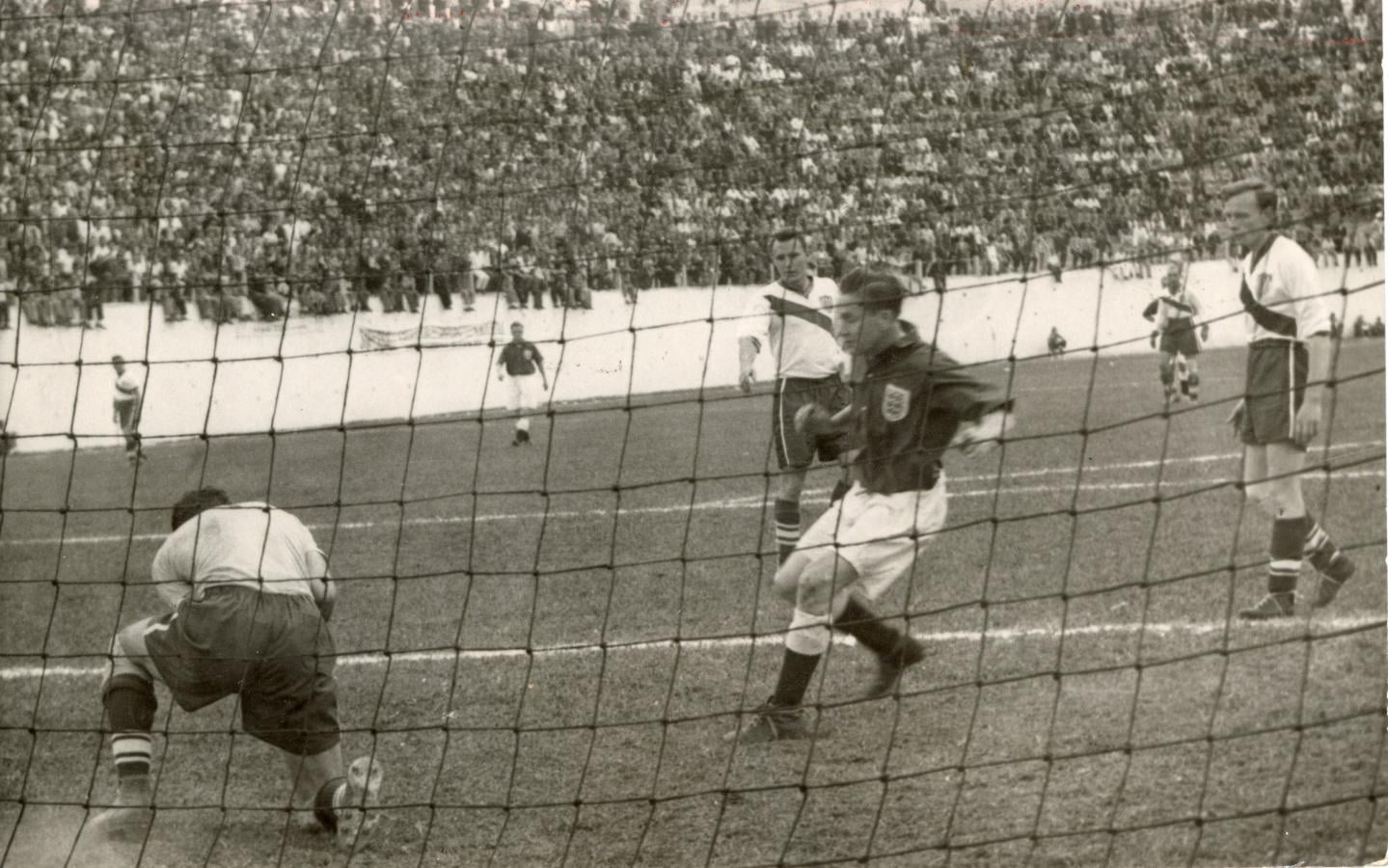
Scenes from the United States’ historic 1–0 victory over England at the 1950 World Cup in Belo Horizonte. Photo: El Gráfico / Unknown author / Public Domain.
Life After the Miracle
The victory over England did not transform Joe Gaetjens into an international superstar. After the World Cup, he continued playing in New York before crossing the Atlantic in 1951 to pursue a professional career in France.
Gaetjens joined Racing Club de Paris, but his time in the French top division was brief. He made four league appearances and scored twice before moving to Olympique Alès, where he spent the following season in the second division. The career that had produced one of the World Cup’s greatest upsets never developed into lasting success in European football.
In 1953, Gaetjens returned to Haiti. He appeared for the Haitian national team against Mexico during qualification for the 1954 World Cup and eventually stepped away from professional football. Back in Port-au-Prince, he married, started a family and built a life away from the international spotlight, including running a dry-cleaning business.
The hero of Belo Horizonte had returned home. But Haiti itself was about to enter one of the darkest periods in its history.
Haiti Under Duvalier
When Joe Gaetjens returned to Haiti, the country he came home to was moving toward profound political change. In 1957, François “Papa Doc” Duvalier was elected president. What followed was an increasingly authoritarian regime built around political repression, fear and the violent militia that became known as the Tonton Macoute.
Gaetjens himself was not known as a political activist. But members of his family were associated with opposition to Duvalier, and that connection would eventually place him in danger. As the regime tightened its control over Haiti, political opponents and their relatives could become targets regardless of their own involvement.
On July 8, 1964, shortly after Duvalier had declared himself president for life, Gaetjens was taken from the family dry-cleaning business in Port-au-Prince by members of the Tonton Macoute. He was 40 years old.
His family never saw him again.
Gaetjens is believed to have been taken to Fort Dimanche, a prison notorious for the detention, torture and killing of political prisoners. He was never formally tried, no official record established what happened to him, and his body was never recovered. He is widely believed to have been killed shortly after his arrest.
Fourteen years earlier, thousands of people in Belo Horizonte had carried Joe Gaetjens from a football pitch as a hero. In Port-au-Prince, he disappeared without a grave.
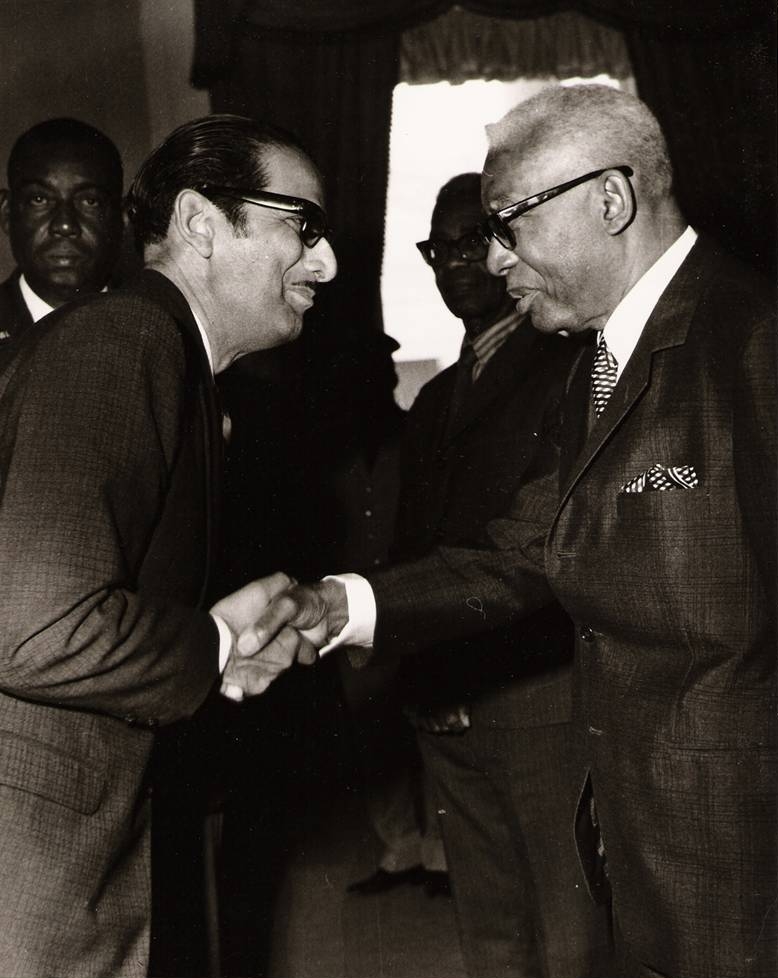
François “Papa Doc” Duvalier in Haiti in 1968, during the authoritarian regime under which Joe Gaetjens disappeared. Photo: Unknown author / Public Domain.
A Hero Without a Grave
For years, Joe Gaetjens’ family searched for answers. There was no trial, no death certificate and no grave to visit. His disappearance left behind uncertainty, but over time the most widely accepted account was that he had been killed after being taken into custody by Duvalier’s forces.
Outside Haiti, however, Gaetjens’ name never completely disappeared. The goal he scored in Belo Horizonte remained part of World Cup history, even as the man behind it was gradually forgotten by much of the football world.
In 1976, the entire United States team from the 1950 World Cup was inducted into the National Soccer Hall of Fame, ensuring Gaetjens a permanent place in American soccer history. Decades later, U.S. Soccer still describes the 1–0 victory over England as one of the greatest upsets in World Cup history.
The contrast is difficult to ignore. Joe Gaetjens became immortal because of a moment witnessed by thousands of people in Brazil, yet the final moments of his own life remain unknown.
Football remembers the goal. History asks us to remember the man.
More Than One Goal
Joe Gaetjens played only three matches for the United States. He scored only once. Yet that single goal was enough to give him a permanent place in World Cup history.
For decades, the story of Belo Horizonte was often told as a football fairy tale: an unlikely American team, an overwhelming favorite and a Haitian-born forward whose diving header produced the impossible. But remembering only the upset means remembering only part of Gaetjens’ life.
He was a Haitian who found an unexpected place in American soccer, a World Cup hero who briefly pursued a career in Europe, and a man who returned home believing that his distance from politics would keep him safe. It did not.
The dictatorship that took Joe Gaetjens away left his family without the certainty of knowing exactly what happened to him. Football, however, preserved something that his killers could not erase: his name.
More than seven decades after that afternoon in Brazil, the United States’ victory over England remains one of the greatest upsets in World Cup history. And at the centre of it remains Joe Gaetjens — the World Cup hero who disappeared, but was never forgotten.
The FootIcon Editorial Team
Preserving football’s greatest stories for future generations.