
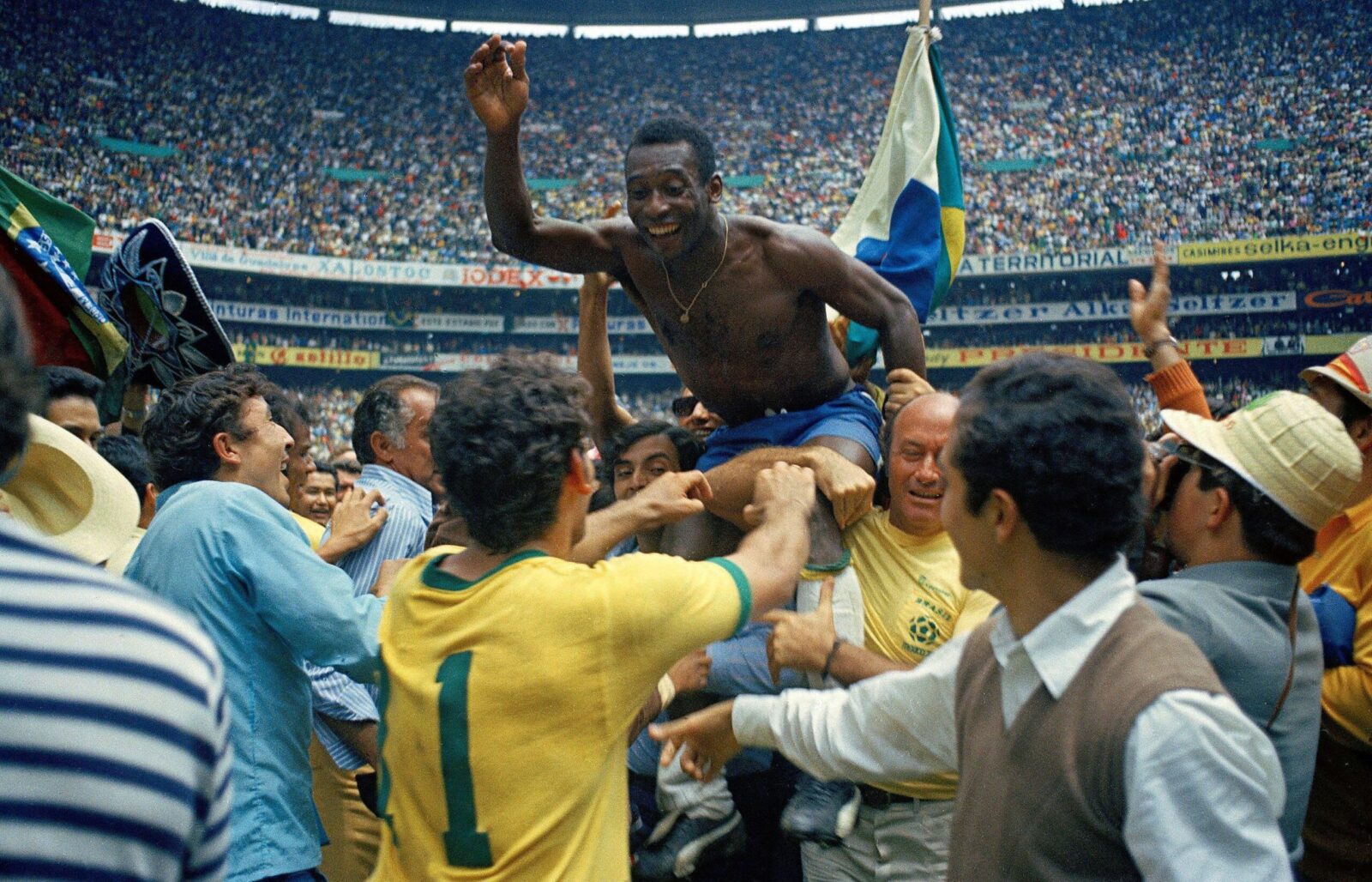
Pelé is carried by his teammates after Brazil’s victory in the 1970 FIFA World Cup Final at the Estadio Azteca in Mexico City. The image symbolizes the pinnacle of one of the greatest careers in football history.
Before football became a multi-billion-dollar industry, before social media, lucrative sponsorship deals, and instant global fame, a boy born in the countryside of Minas Gerais changed the history of the world’s most popular sport forever.
Wearing the shirts of Santos FC and the Brazilian National Team, Edson Arantes do Nascimento — Pelé — achieved far more than trophies. He transformed football into a universal language, bringing cultures together, inspiring millions of people, and elevating the game to a level never seen before.
Decades after his final match, his name remains synonymous with greatness. But what made Pelé such a unique figure that the world simply came to know him as “The King”?
Player Profile
| Born | October 23, 1940 |
| Died | December 29, 2022 |
| Nationality | Brazilian |
| Position | Forward |
| Clubs | Santos FC • New York Cosmos |
| FIFA World Cups | 1958 • 1962 • 1970 |
| Nickname | The King |
From the Streets of Três Corações to an Impossible Dream
Pelé was born in Três Corações, Minas Gerais, into a humble family. The son of João Ramos do Nascimento, known as Dondinho, and Celeste Arantes, he grew up in an era when football was driven more by passion than by money.
As a child, he improvised footballs made from socks, newspapers, and rags while playing in the streets of Bauru, where his family later settled. Limited resources never diminished his love for the game. Instead, they helped develop the creativity, technique, and intelligence that would later amaze the world.
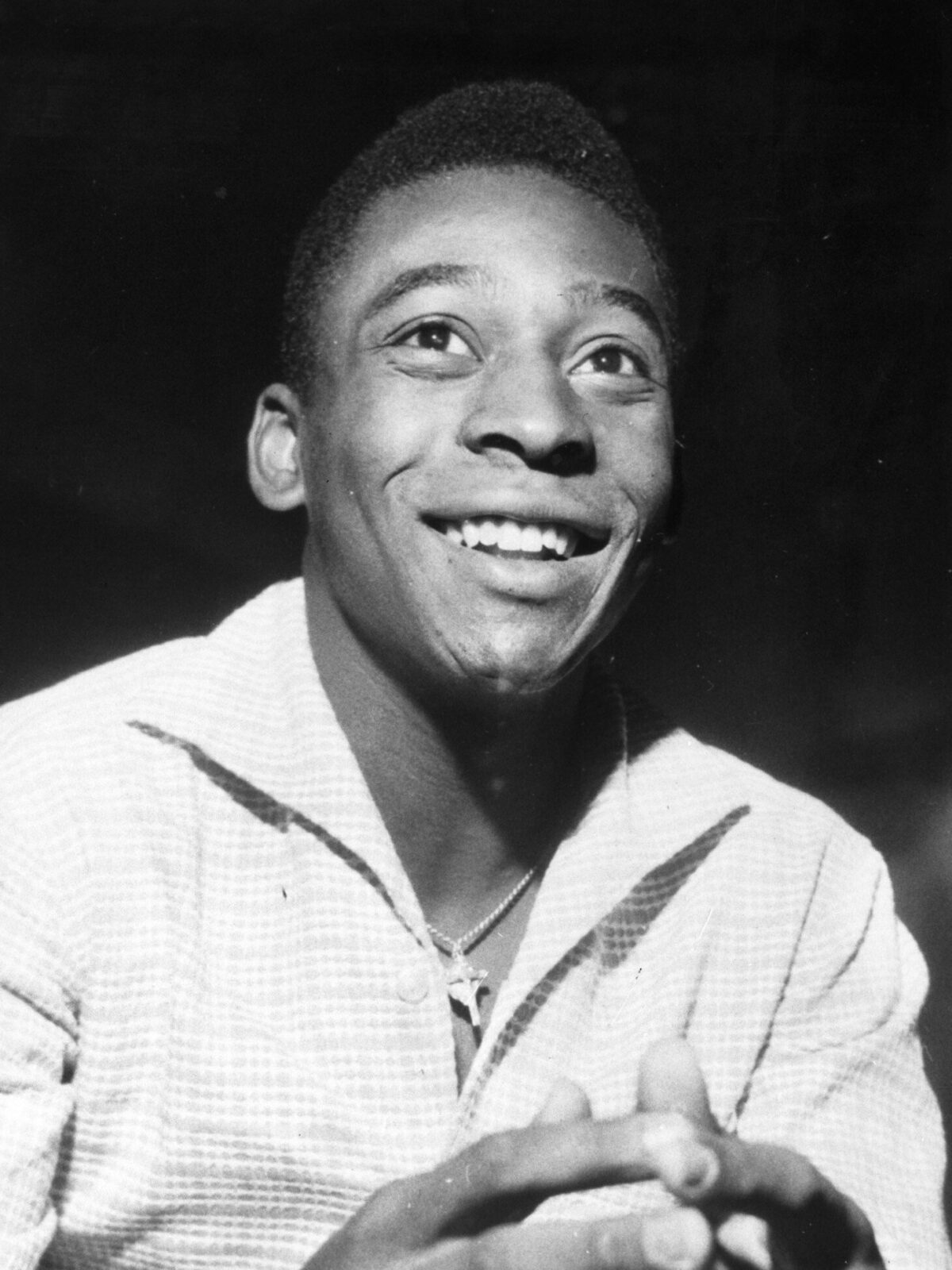
It was in this modest environment that an extraordinary talent emerged. His father recognized his ability early on, but it was former footballer Waldemar de Brito who saw something even greater. Convinced he had discovered a future superstar, he took the young Pelé to Santos Futebol Clube, boldly predicting that the boy would become the greatest footballer in the world.
Pelé is carried by his teammates after Brazil’s victory in the 1970 FIFA World Cup Final at the Estadio Azteca in Mexico City. The image symbolizes the pinnacle of one of the greatest careers in football history.
The Boy Who Conquered the World at 17
In 1956, at just 15 years old, Pelé made his professional debut for Santos FC. His talent stood out immediately. His quick dribbling, clinical finishing, and remarkable maturity made him look like a seasoned professional despite his age.
Only two years later came the opportunity that would change his life forever. Called up for the 1958 FIFA World Cup in Sweden, Pelé arrived at the tournament while recovering from an injury. After missing the opening matches, he earned his place in the team and produced one of the greatest performances in World Cup history.
He scored the winning goal against Wales in the quarter-finals, netted a hat-trick against France in the semi-finals, and scored twice in Brazil’s 5–2 victory over hosts Sweden in the final, becoming the youngest player ever to score in a FIFA World Cup Final.
The image of the teenage Pelé in tears after the final whistle traveled across the globe. In that moment, the world witnessed not just a champion, but the birth of a football legend.
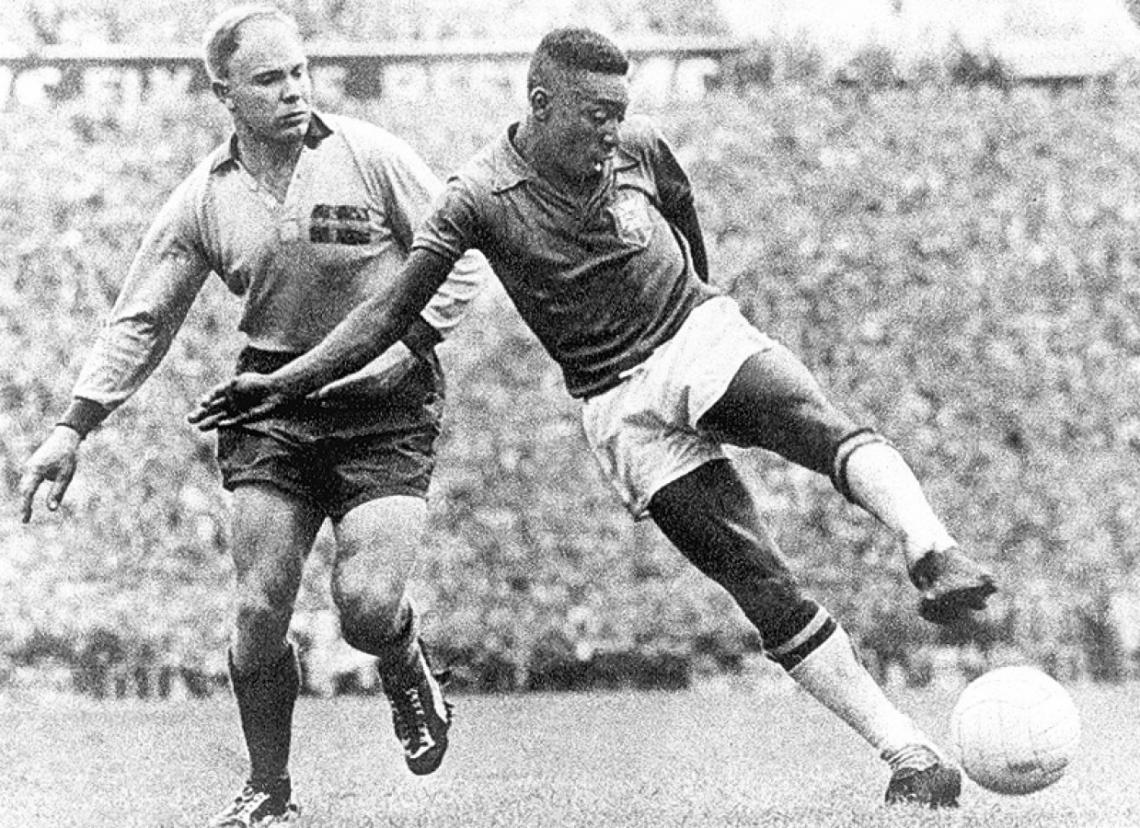
At just 17 years old, Pelé led Brazil to its first FIFA World Cup title in Sweden in 1958.
Santos FC Conquers the World
Winning the World Cup in 1958 made Pelé an international sensation, but it was at Santos FC where his legend truly took shape. Alongside one of the most talented generations in Brazilian football, Santos became one of the greatest clubs in world football.
Throughout the 1950s and 1960s, Santos collected domestic and international titles while touring the globe. Thousands of fans flocked to stadiums simply to watch Pelé play, and every match strengthened the club’s reputation for spectacular attacking football.
In 1962 and 1963, Santos won the Copa Libertadores before defeating Benfica and AC Milan to lift the Intercontinental Cup. In Lisbon, Pelé delivered one of the finest performances of his career, scoring a hat-trick in a remarkable 5–2 victory over Benfica.
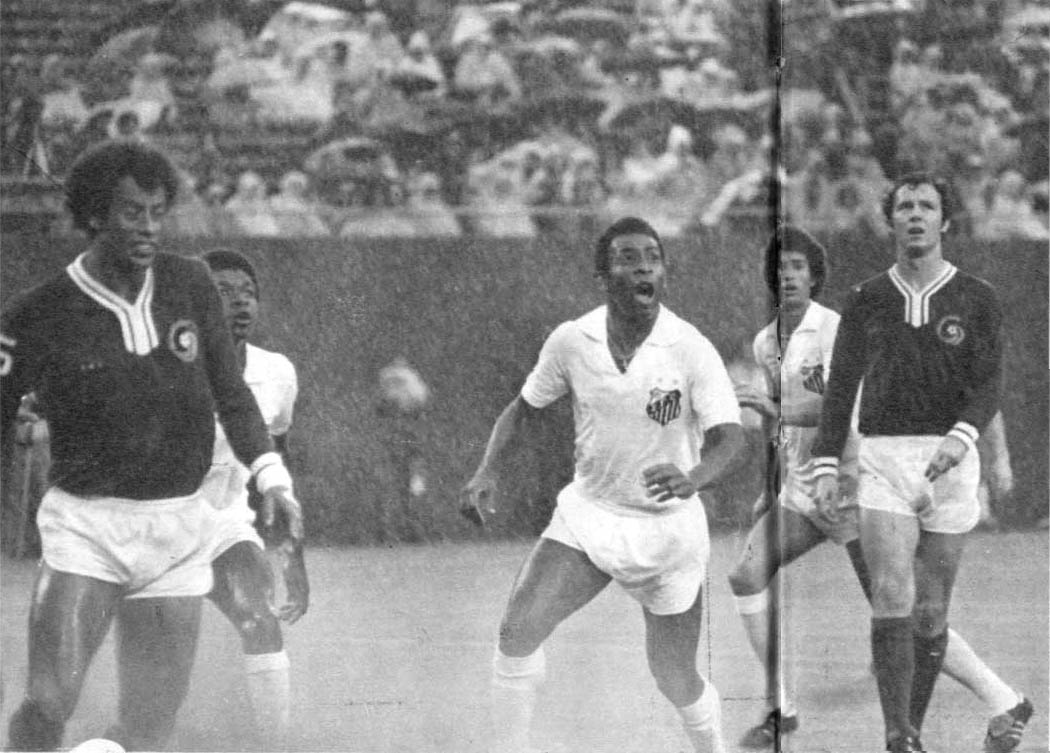
Pelé playing for Santos FC, where he won numerous domestic and international titles while helping introduce Brazilian football to the world.
Did You Know?
Santos FC played hundreds of international matches during Pelé’s era. In many countries, these friendlies were treated as major national events, helping popularize Brazilian football and turning Pelé into a global celebrity long before satellite television and the internet.
More Than Goals
Measuring Pelé’s greatness solely by his goals or trophies would be incomplete. His greatest achievement was transforming football into a global phenomenon capable of bringing together people from different cultures, languages, and generations.
At a time when international broadcasts were still limited, Pelé’s name was already recognized across every continent. His performances for Santos FC and Brazil captured worldwide attention, making him one of the first truly global sporting icons.
Throughout his career, he faced some of football’s greatest players and met world leaders, artists, and international personalities, always representing Brazilian football with dignity and excellence. His charisma, combined with extraordinary talent, built a legacy that transcended sport itself.
It is no coincidence that Pelé became universally known as “The King of Football.” The nickname was earned not only through victories and records, but through his unique ability to inspire millions and elevate football’s place on the global stage.
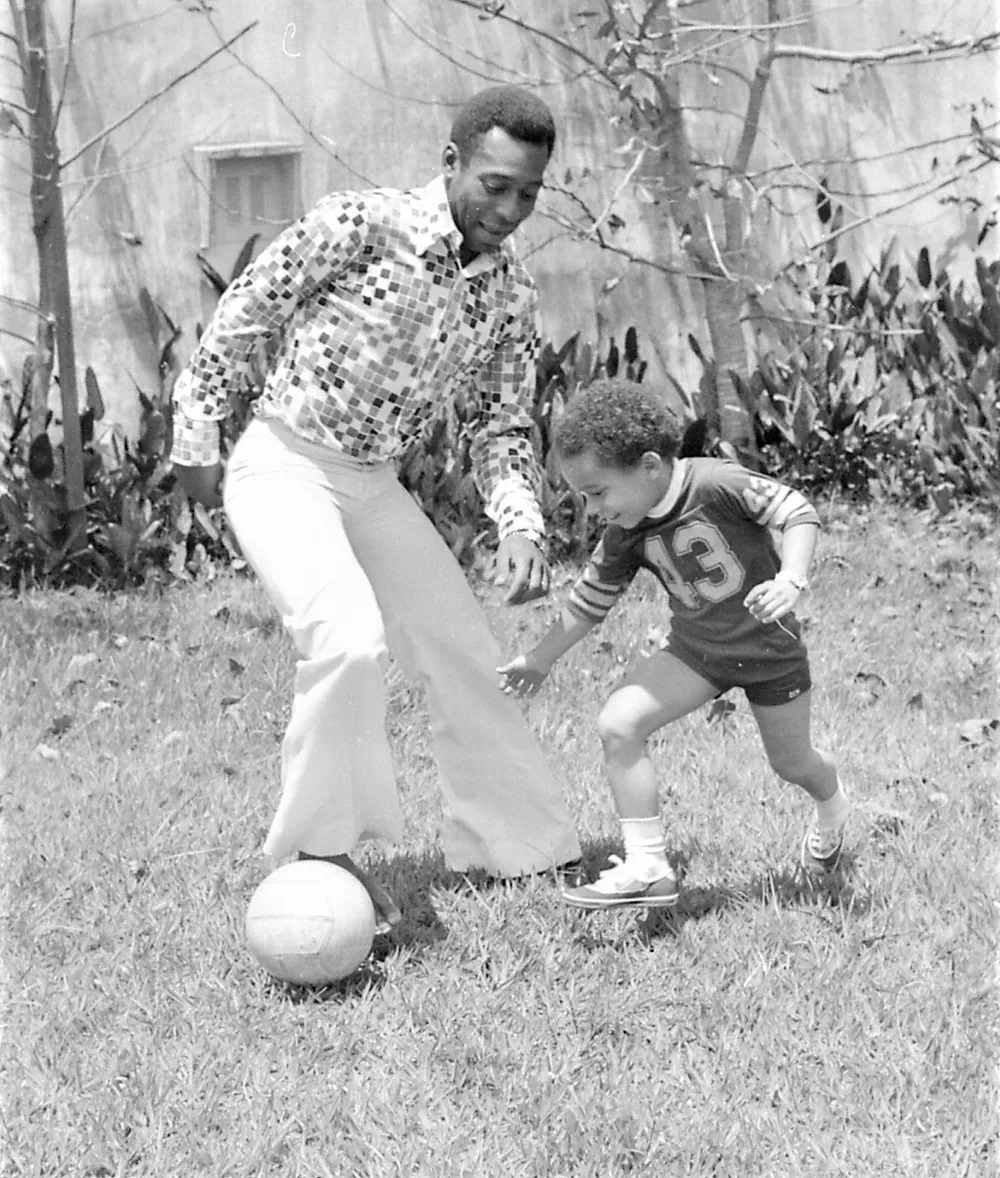
Beyond the football pitch, Pelé inspired generations of young players and became one of the greatest ambassadors in sporting history.
By the Numbers
| Statistic | Number |
| FIFA World Cups | 3 |
| World Cup Goals | 12 |
| Brazil Appearances | 92 |
| Brazil Goals | 77 |
| Copa Libertadores Titles | 2 |
| Intercontinental Cups | 2 |
The Legacy of a King
When Pelé retired in 1977, his influence had already grown far beyond statistics. His goals, titles, and records became part of football history, but his greatest legacy was proving that the sport could unite people across cultures, languages, and generations.
Decades after his retirement, new stars emerged, records were broken, and football continued to evolve. Yet few players have matched Pelé’s impact both on and off the pitch. His name remains central to debates about the greatest footballers of all time, while his story continues to inspire books, documentaries, and generations of fans.
On December 29, 2022, the world said goodbye to Edson Arantes do Nascimento. Yet the legend known as Pelé continues to live on. For many, he remains the greatest footballer in history. For everyone, he stands as one of the greatest ambassadors the sport has ever known.
More than a champion, Pelé transformed football into a shared cultural heritage that belongs to the entire world. His legacy is not only Brazil’s or Santos FC’s—it belongs to football itself.
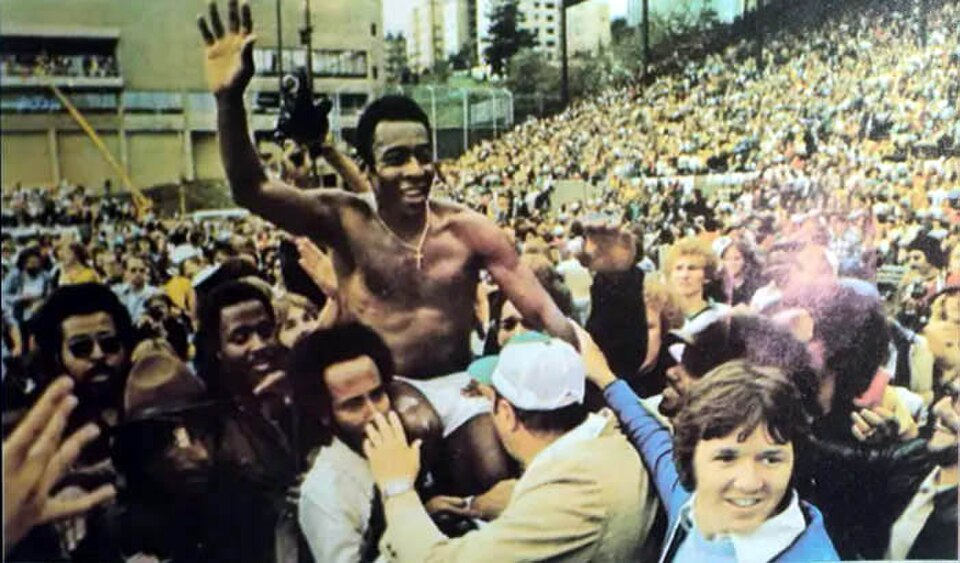
Even after retiring, Pelé remained a universal symbol of football, leaving behind a legacy that continues to inspire millions around the world.
The FootIcon Editorial Team
Preserving football’s greatest stories for future generations.